

When “License Plate Readers” Point at a Pool, the Explanation Starts to Fall Apart
Flock Safety and its supporters often frame these cameras as narrow, limited tools: they are just license plate readers, they only collect vehicle evidence, and they are not meant to watch people. That was the same basic message pushed during the recent Woodlands Township discussion, where officials described Flock as an investigative tool used to identify vehicles tied to crime, with officials emphasizing license plates, vehicle make, model, and limited retention periods.
But then you see cameras like this.
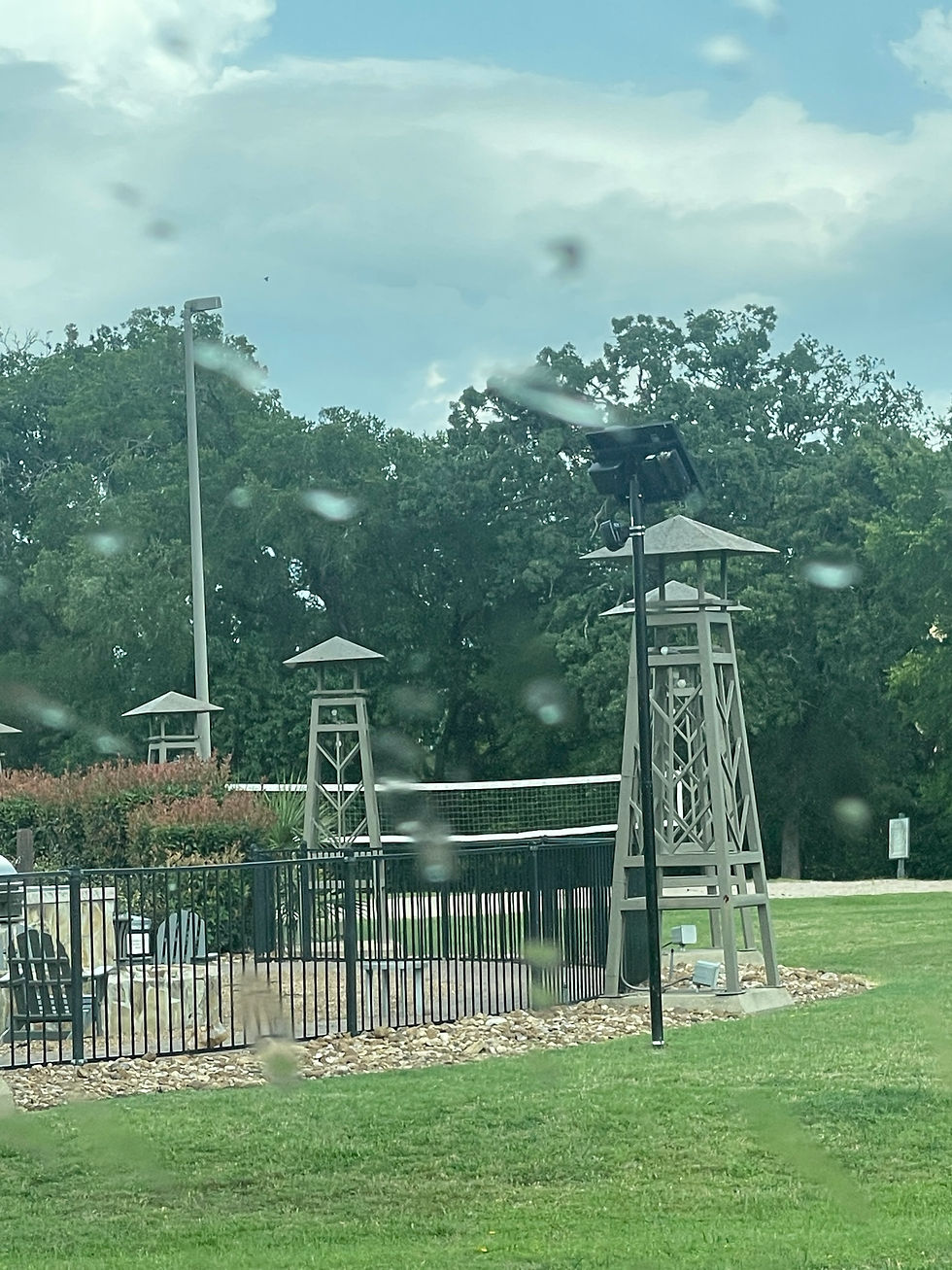
In the photo, two pole-mounted camera units appear to be positioned at an apartment complex pool area, not at a roadway, entrance gate, parking-lot choke point, or traffic lane. They appear to be facing into a recreational area: fencing, lounge chairs, grass, pool structures, and a volleyball net. In other words, this does not look like a setup designed primarily to capture license plates from passing vehicles. It looks like a camera placement aimed at a place where people gather.

That is where the public explanation starts to feel slippery.
Flock’s own public-facing materials separate License Plate Reader products from Video Cameras, describing LPRs as vehicle-identification tools and video cameras as tools for “scene visibility” that let users see incidents unfold with searchable video and shared context. That distinction matters. If the public is being told, “These are just license plate readers,” then residents deserve to know why cameras are being placed where license plates are not the obvious target.
The concern is not just that a camera exists. The concern is the mismatch between the sales pitch and the physical reality.
When a camera is installed along a road, the argument is straightforward: it is there to capture license plates from vehicles entering or leaving an area. People can still object to that, but at least the placement matches the stated purpose. But when cameras are aimed toward a pool, a park, a playground, or another gathering space, the question changes.
At that point, residents are no longer only asking, “Should police or private entities be collecting license plate data?”
They are asking, “Are these cameras being used to watch people?”
That is a very different public conversation.
This is especially important because Flock has become highly skilled at reassuring communities with narrow language. In The Woodlands, the public discussion focused on license plate reader cameras and their use by law enforcement as an investigative tool. The township report described 30 cameras planned throughout The Woodlands, and local reporting noted that officials said the system would help identify vehicles linked to crime.
But if similar Flock-connected camera systems are being installed at private apartment complexes in locations where they cannot realistically function as license plate readers, then residents should not accept the same canned explanation.
A pool-facing camera does not raise the same issue as a road-facing plate reader. It raises questions about live monitoring, video access, retention, searchability, sharing, and whether residents were clearly informed that cameras near a recreational amenity may capture them, their children, their guests, and their daily routines.
And this is where the issue becomes bigger than one apartment complex.
If the technology is presented to city councils and township boards as a limited public-safety tool, but then is marketed or deployed in private spaces as general surveillance infrastructure, the public deserves a clearer answer. Is Flock a license plate reader company, or is it a broader surveillance platform? Flock’s own website lists both LPR products and video camera products, which suggests the answer is not as simple as “it only reads plates.”
That distinction should be made plainly in every public meeting.
Residents should ask:
What exact camera model is installed here?
Is it an LPR camera, a live-feed video camera, or both?
Who can access the feed?
Is video recorded?
How long is it stored?
Can law enforcement access it directly or by request?
Can Flock employees access it for support, review, training, or troubleshooting?
Is footage searchable by time, person, vehicle, object, or event?
Were residents notified that cameras may be facing pool or recreational areas?
These are not paranoid questions. They are basic governance questions.
Supporters of Flock often say concerns are based on misinformation. But the fastest way to clear up misinformation is transparency. Show the camera model. Show the field of view. Show the data collected. Show the access logs. Show the retention policy. Show whether this is an LPR-only device or a live video camera. Show whether apartment residents consented to being recorded in a pool area.
Because once a camera is pointed somewhere that license plates are not, the “it only reads plates” defense no longer works.
The public should not have to accept one explanation at city hall and then a different reality in their neighborhoods. If Flock and its partners want to claim these systems are narrowly focused on vehicles, then the placements should reflect that. And when the placements do not reflect that, officials, property managers, and Flock should be expected to explain exactly what is being captured and why.
A camera facing a pool is not just a technical detail.
It is a trust problem.
Sources:


Comments